What To Make Of A Life by Jim Collins
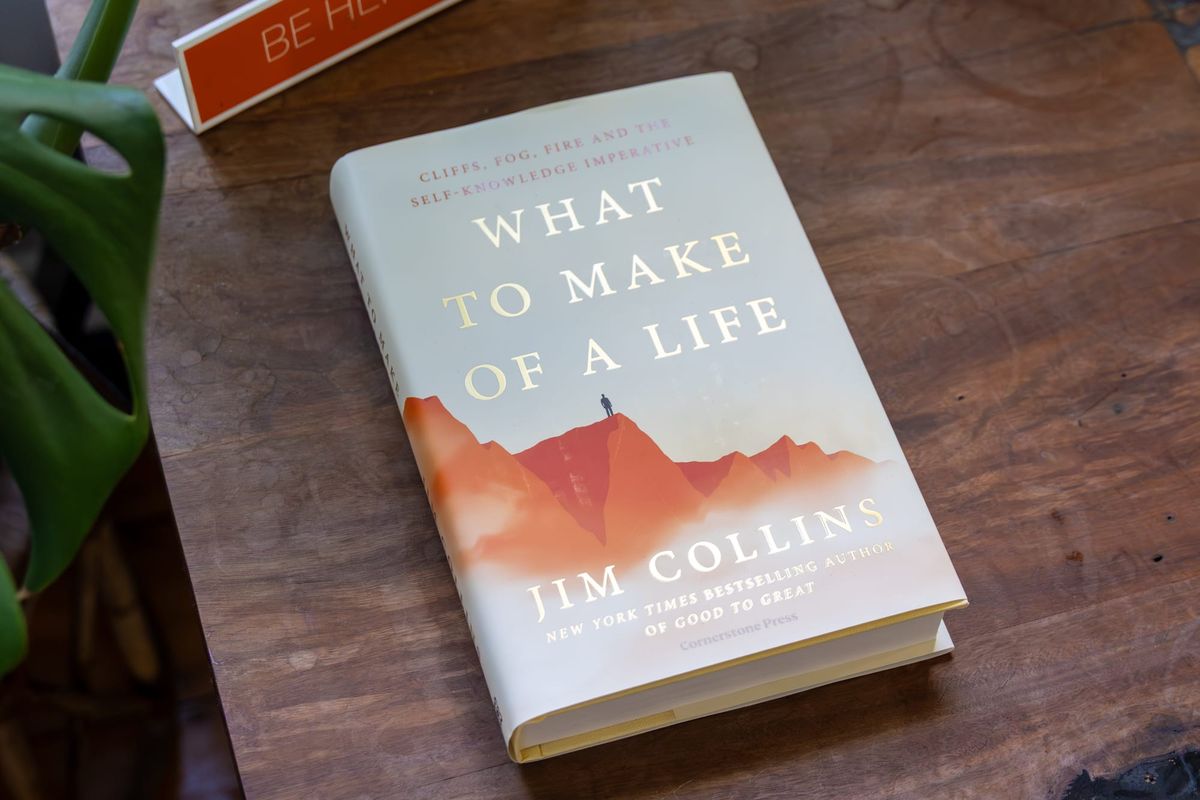
I just finished reading What To Make For A Life by Jim Collins. It’s a fascinating read. Jim Collin’s researched the live stories of 34 personalities, explored similarities and differences in their lives and formulated themes and mindsets their lives had in common. Some of the personalities, include the likes of Michael J Fox, Benjamin Franklin, John Glenn, Jimmy Page, or Meryl Streep.
Over the course of their lives all explored people seem to have encountered junctures that Jim Collins calls cliffs, significant events that changed their lives. A cliff is often followed by a period of fog in which a reorientation of life trajectory happens. A lot of the researched personalities sustained decades of devotion to one or more causes by feeding their inner fire.
At some point in their lives all of researched individuals discovered a set of personal encodings. These encodings are things they could do exceptionally well relative to other things they could spent their time on. These encodings matched the cause they were devoted to. You could say they found their calling. Over time their purpose of work to make money changed to the purpose of money to do their work.
The book outlines some interesting strategies the explored people followed, like making many small iterative steps in the right direction rather than big irreversible leaps when in the uncertainty of the fog of life. Outlined strategies to feed your inner fire include toggling between extending out beyond your comfort zone and circling back to things you are already good at as well as choosing your responsibilities to align your encodings with something you believe in.
It’s a very inspiring read and I really enjoyed learning about the 34 personalities. I’m curious though how much luck and privilege had to line up to propel to people explored into the spheres of success they found themselves in.
One of the main themes of the book is to discover ways to align the things you are good at and you enjoy with causes which you care for. Sometimes we forget about this alignment and it’s probably good to reflect about it every so often. Overall, I can highly recommend the book.